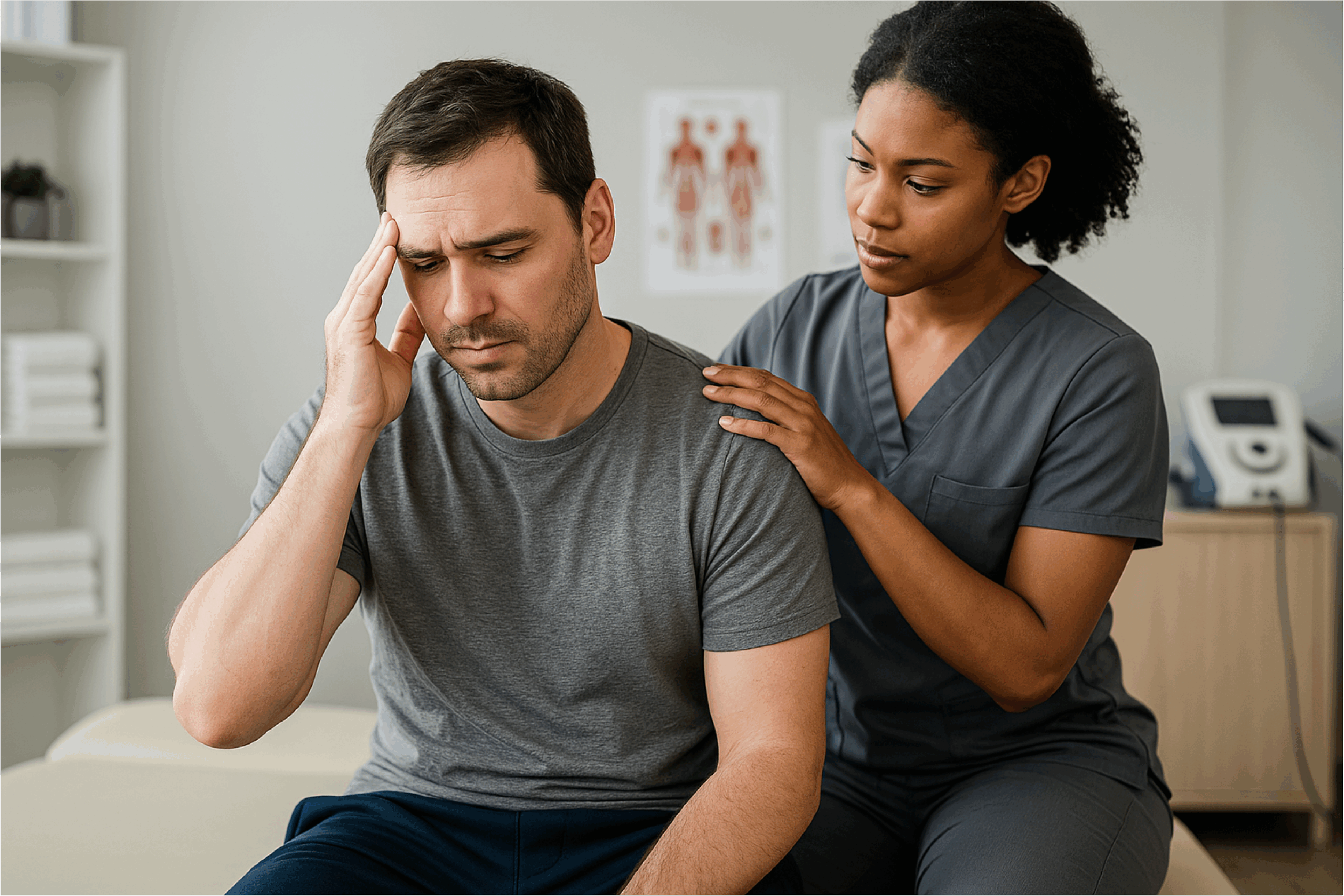
Post-Concussion Therapy in Atlanta
Find the Best Concussion Rehabilitation Near You
Trusted Post-Concussion Recovery in Atlanta
Most concussions settle down within a few weeks. When yours does not, and the headaches, fog, and dizziness are still running your days a month later, the problem is no longer the original injury but the systems it disrupted, and those respond to treatment rather than to waiting. Motion Rehab provides concussion rehabilitation across metro Atlanta, delivered by therapists trained to find which system is holding your recovery back and to progress you past it safely.
Post-concussion recovery is rarely one problem. Neck injury, vestibular disruption, visual strain, and exercise intolerance overlap constantly, especially after a car accident, and treating one while ignoring the others is why symptoms stall. Our therapists screen for all of them at the first visit and build one plan that moves them together, with our integrated network’s neurologists a step away when a case calls for one. You should not have to assemble your own recovery out of four separate appointments.
Meet Motion Rehab’s Concussion Recovery Team
Concussion rehabilitation asks a therapist to work across several systems at once, and our clinicians carry the specialty training that requires:
- Vestibular assessment and treatment for post-concussion dizziness and imbalance
- Cervical spine treatment for the neck injury that drives many post-concussion headaches
- Graded exertion testing and sub-symptom-threshold exercise progressions
- Staged return-to-work, return-to-school, and return-to-sport planning

Dili Divakaran
Physical Therapist
Dili Divakaran is a Licensed Physical Therapist with more than 15 years of experience providing compassionate, evidence-based care across outpatient, orthopedic, geriatric, and home health settings. She is dedicated to helping patients recover from injury, restore function, and improve their quality of life through personalized treatment plans tailored to their individual goals. Dili combines extensive clinical expertise with a patient-centered approach, treating a wide range of conditions including motor vehicle accident injuries, workers' compensation cases, post-surgical rehabilitation, vestibular disorders, and concussions. Her experience in dry needling, balance and fall prevention, and multidisciplinary collaboration reflects her commitment to delivering comprehensive, high-quality care and achieving the best possible outcomes for every patient.
Education
Bachelor’s Degree, Physical Therapy | Mahatma Gandhi University, School of Medical Education
Certifications
Dry Needling DN-C
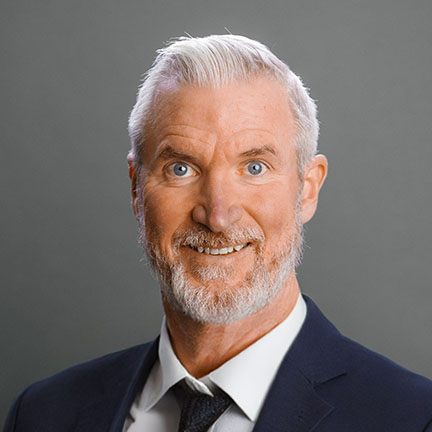
Mark Carter
Physical Therapist Assistant
Mark Carter is a Licensed Physical Therapist Assistant dedicated to providing high-quality, patient-centered care that promotes recovery, mobility, and independence. With hands-on clinical experience and a strong commitment to excellence, Mark supports each patient’s journey toward improved strength and function through evidence-based treatment and compassionate guidance. Known for his teamwork and attention to detail, Mark collaborates closely with physical therapists to ensure continuity of care and optimal outcomes. His dedication to patient success and passion for rehabilitation make him a valued member of the clinical team.
Education
Associate of Applied Science in Physical Therapist Assistant | Chattahoochee Technical College
Certifications
Licensed Physical Therapist Assistant
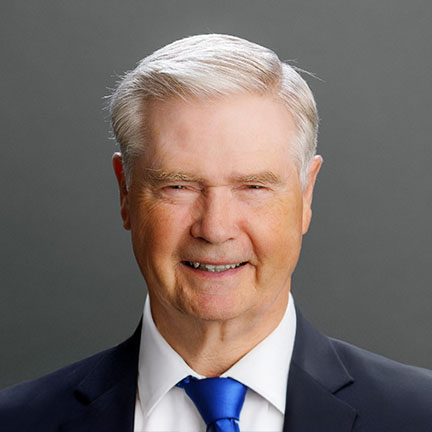
Art Peddle
Physical Therapist
Art Peddle is a Licensed Physical Therapist committed to helping patients achieve optimal movement, function, and independence through compassionate, evidence-based care. With a strong foundation in physical therapy, Art focuses on restoring mobility, reducing pain, and enhancing overall quality of life for every patient he serves. Throughout his career, Art has worked with a wide range of patient populations, developing personalized treatment plans that promote recovery and long-term results. His hands-on approach, clinical expertise, and dedication to individualized care reflect his commitment to professional excellence and outstanding patient outcomes.
Education
Bachelor of Science in Physical Therapy | Georgia State University Bachelor of Arts in Psychology | David Lipscomb University Associate of Arts and Science | Rochester College
Certifications
Licensed Physical Therapist
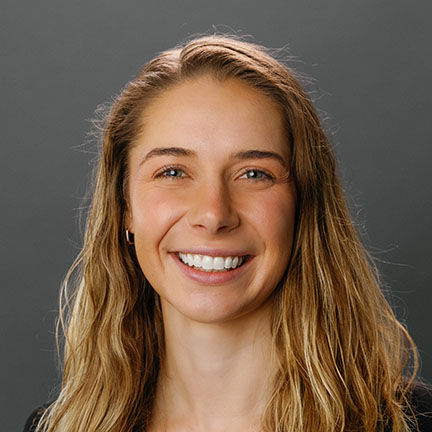
Anna Haley
Physical Therapist
Anna Haley is a Licensed Physical Therapist passionate about helping patients restore movement, reduce pain, and regain confidence in their physical abilities. She is committed to delivering personalized, evidence-based care that supports long-term recovery and empowers patients to take an active role in their health. With advanced clinical training and a strong foundation in orthopedic and neurological rehabilitation, Anna combines compassion and precision in her practice. Her patient-centered approach ensures every individual receives comprehensive care designed to achieve meaningful outcomes and improve quality of life.
Education
Doctor of Physical Therapy | High Honors | Philadelphia College of Osteopathic Medicine | May 2022 Bachelor of Arts in Health and Human Kinetics | Ohio Wesleyan University | May 2018
Certifications
Licensed Doctor of Physical Therapy

Nia Evans
Physical Therapist
Nia Evans is a Licensed Physical Therapist and certified Respiratory Therapist with extensive experience providing exceptional, patient-focused care. She is dedicated to helping individuals recover from injury, improve mobility, and enhance their overall quality of life. With advanced training and certifications in BLS (Basic Life Support), ACLS (Advanced Cardiovascular Life Support), PALS (Pediatric Advanced Life Support), and NRP (Neonatal Resuscitation Program), Nia brings a deep understanding of cardiopulmonary and physical rehabilitation to her practice. Her evidence-based approach and commitment to compassionate care ensure that each patient receives personalized treatment to achieve the best possible outcomes.
Education
Doctor of Physical Therapy | New York University Bachelor of Science in Cardiopulmonary Science / Respiratory Therapy | Georgia State University Associate of Arts in General Studies / Pre-Physical Therapy | University of North Florida
Certifications
Licensed Doctor of Physical Therapy Dry Needling Certified DN-C Certified Vestibular Therapist
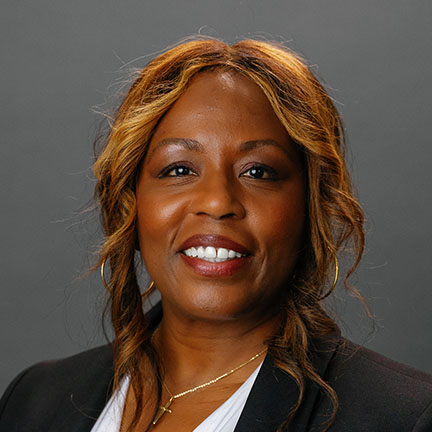
Glendora Hurst
Physical Therapist
Glendora Hurst is a Licensed Physical Therapist with many years of experience providing high-quality, individualized care. She is dedicated to helping patients restore movement, reduce pain, and achieve their optimal level of function through evidence-based, compassionate treatment. Glendora combines clinical expertise with a patient-first mindset, guiding individuals through recovery with personalized rehabilitation plans designed to meet their specific needs and goals. Her background as an APTA Clinical Instructor (2016) and advanced certification in Dry Needling (2016) reflect her commitment to professional growth and clinical excellence.
Education
Doctor of Physical Therapy | University of Montana, Missoula Bachelor of Science in Physical Therapy, Cum Laude | Howard University, Washington, D.C. Bachelor of Science in Natural Sciences, Magna Cum Laude | Oakwood University, Huntsville, Alabama
Certifications
Licensed Doctor of Physical Therapy APTA Clinical Instructor Dry Needling DN-C BLS
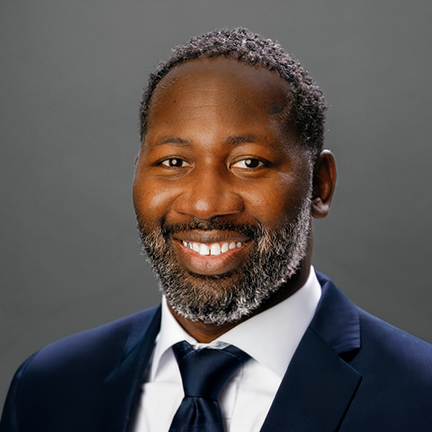
Angelo Goshen
Athletic Trainer Certified
Angelo Goshen is a Certified Athletic Trainer (ATC) with extensive experience in sports injury prevention and rehabilitation. He is dedicated to helping patients and athletes recover safely and build long-term strength and mobility through personalized care. With a strong background in Sports Administration and Athletic Training, he combines clinical expertise with a deep understanding of movement and performance. Angelo takes a collaborative, patient-centered approach, ensuring each treatment plan supports both physical recovery and overall well-being.
Education
Masters, Sports Administration | Henderson State University Bachelor of Science Athletic Training/Trainer | Henderson State University
Certifications
Certified Athletic Trainer
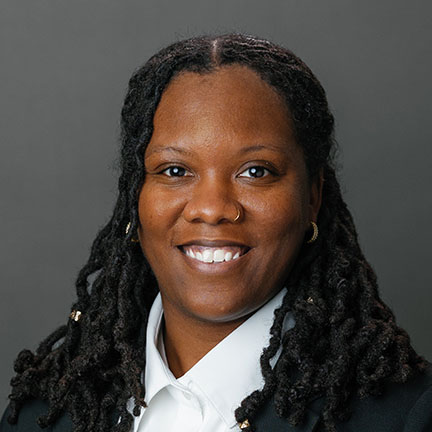
Andrienne Terrell
Athletic Trainer Certified
Andrienne Terrell is a Certified Athletic Trainer (ATC) dedicated to helping patients and athletes prevent injury, enhance performance, and recover safely. With a strong foundation in athletic training and advanced education in business administration and healthcare management, Andrienne brings both clinical expertise and strategic insight to every aspect of care. Her experience spans injury prevention, acute care, and rehabilitation, with a focus on delivering high-quality, evidence-based support to improve patient outcomes. Andrienne is passionate about empowering individuals to reach their full physical potential through education, teamwork, and compassionate care.
Education
Master of Business Administration – Health Care Administration/Management | Oklahoma State University Master’s Degree in Business Administration & Development | Tusculum University Bachelor of Science in Athletic Training | Greensboro College
Certifications
Certified Athletic Trainer
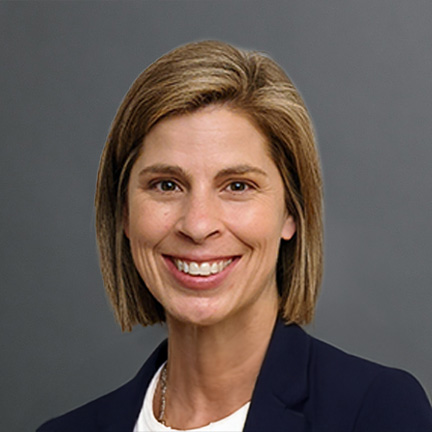
Christina Sims
Physical Therapist
Christina Sims is a Licensed Physical Therapist with years of experience helping patients recover from injury, improve movement, and enhance their quality of life. She is dedicated to delivering high-quality, evidence-based care that supports lasting improvement and independence. With her BLS and CPR certifications, Christina provides safe and effective therapy rooted in compassion and professional excellence. She takes a patient-centered approach to care, developing customized treatment plans that address each individual’s unique needs and goals.
Education
Masters in Physical Therapy | Maryville University of Saint Louis
Bachelor of Science | Maryville University of Saint Louis
Certifications
Licensed Physical Therapist BLS CPR
What Is Post-Concussion Syndrome?
A concussion is a mild traumatic brain injury that changes how the brain functions temporarily, usually without anything showing up on standard imaging. Post-concussion syndrome, also called persistent post-concussive symptoms, is the term for symptoms that outlast the expected recovery window, generally beyond about four weeks in adults. Most people recover well before that point; a meaningful minority do not, and that group benefits most from structured rehabilitation.
Clinical understanding here has changed substantially. The old advice to rest in a dark room until every symptom disappeared has given way to evidence supporting a brief period of relative rest, typically a day or two, followed by gradual, carefully dosed return to activity. Prolonged inactivity tends to prolong symptoms. Guided exertion, vestibular work, and neck treatment, introduced at the right level, are what move recovery forward.
Signs You Need Concussion Rehabilitation
Symptoms that stall, return, or flare with ordinary activity are a sign that recovery needs a hand, not a sign that something is wrong with you. Consider an evaluation if you notice:
- Headaches that keep coming back. Post-concussion headaches often originate in the neck as much as the head, which is why they respond to hands-on treatment.
- Dizziness or unsteadiness. Spinning, swaying, or a sense that busy environments are too much points to vestibular involvement.
- Brain fog and concentration trouble. Difficulty holding focus at work or school, especially as the day wears on, is one of the most commonly reported persistent symptoms.
- Screen and light sensitivity. Visual strain with reading, scrolling, or fluorescent lighting suggests the eye-movement system needs retraining.
- Symptoms that spike with exertion. Feeling worse after light exercise indicates an exercise tolerance that has to be rebuilt deliberately rather than pushed through.
- Sleep disruption and irritability. Changes in sleep and mood commonly travel with concussion recovery and factor into the plan.
Symptoms that worsen sharply, including severe or escalating headache, repeated vomiting, seizures, weakness, or confusion, call for emergency medical evaluation rather than an outpatient appointment.
Post-Concussion Symptoms We Treat
Our therapists treat the physical systems behind persistent symptoms, coordinating with physicians when a case needs medical management alongside rehabilitation:
- Post-concussion headaches: frequently cervicogenic, arising from neck joints and muscles injured in the same impact, and treated through manual therapy and targeted strengthening.
- Dizziness and vertigo: vestibular disruption addressed through our vestibular therapy program, which runs on the same plan rather than as a separate course of care.
- Balance problems: unsteadiness on uneven ground, in the dark, or while turning, retrained through progressive balance work.
- Visual and oculomotor symptoms: trouble with tracking, focusing, or tolerating screens, treated with eye-movement exercises.
- Exercise intolerance: symptoms triggered by exertion, rebuilt with a tested, sub-threshold aerobic progression.
- Neck pain and stiffness: the whiplash-type injury that accompanies most concussions and quietly sustains other symptoms.
- Fogginess and fatigue: addressed indirectly but reliably as the systems above improve and activity tolerance climbs.


How Motion Rehab’s Concussion Evaluation Works
Persistent symptoms usually have more than one driver, and the evaluation exists to identify which ones are active in your case:
Symptom and History Review
Vestibular and Balance Screening
Cervical Spine Examination
Graded Exertion Testing
Concussion Rehabilitation Treatments We Offer
Vestibular and Balance Retraining
Gaze stabilization, habituation, and balance exercises recalibrate the systems that keep you oriented, reducing dizziness and the motion sensitivity that makes busy environments exhausting.
Manual Therapy for Post-Concussion Headaches
Joint mobilization and soft-tissue treatment of the neck, paired with deep neck strengthening, address the cervical source behind a large share of persistent headaches.
Sub-Symptom Threshold Aerobic Exercise
Using the threshold found during exertion testing, your therapist prescribes aerobic activity just below your symptom trigger, then raises the ceiling as tolerance improves. Current evidence supports this graded approach over extended rest.
Oculomotor and Visual Retraining
Targeted eye-movement exercises rebuild tracking, convergence, and focus tolerance, which is what makes reading and screen work sustainable again.
Staged Return to Work, School, and Sport
Progressive activity plans reintroduce cognitive and physical demands in steps, with clear criteria for advancing and clear instructions for backing off when symptoms flare.
Key Benefits at Motion Rehab

Third-Party Liability Billing

Most Insurance Accepted

Same-Week Appointments

Network Imaging Coordination
What to Expect During Concussion Rehabilitation
Expect the plan to be paced rather than pushed. Sessions work close to your symptom threshold without blowing past it, because the fastest recovery comes from consistent sub-threshold loading rather than from heroic efforts followed by days of setback. Most patients attend one to two visits per week with daily home exercises in between, and the home program carries much of the progress.
Expect an honest timeline. Recovery varies widely, and anyone promising a fixed number of weeks is guessing. What your therapist can offer is measurement: the same symptom scores, balance tests, and exertion thresholds retested on a schedule, so the trend is visible instead of felt. For most patients the exertion threshold climbs before the symptoms noticeably ease, so the numbers tend to move first.
How to Prepare for Your Concussion Evaluation
- Bring any records from the injury. Emergency room notes, imaging results, or physician documentation give your therapist the medical context.
- Note when symptoms started and what triggers them. The pattern across a typical day is more useful than a snapshot of how you feel in the room.
- Bring your glasses or contacts. Visual assessment needs the correction you actually wear day to day.
- Come dressed to move. The evaluation includes balance testing and, in most cases, monitored exertion testing.
- Arrange a ride if dizziness is significant. Testing can briefly provoke symptoms, and driving afterward is worth avoiding.
Insurance and Payment for Concussion Treatment
Two questions come up constantly in concussion cases, and both have straightforward answers here. On coverage, rehabilitation is billed as physical therapy, which most major plans include, and we confirm your specific benefits before you come in. On access, you do not generally need a referral to begin under Georgia’s direct-access law, though when a neurologist or physician is already managing your case, we treat alongside them and share progress rather than working in parallel. Collision-related concussions add a third answer: eligible patients can start care through third-party liability billing while the claim is open.
Why Atlanta Chooses Motion Rehab for Concussion Recovery
Persistent concussion symptoms usually land patients in a referral loop: a physician for the headaches, somewhere else for the dizziness, a third opinion about returning to work. Motion Rehab treats the whole picture in one place, with clinicians trained across the vestibular, cervical, and exertion sides of recovery, in neighborhood clinics across eleven metro Atlanta communities. Patients whose concussion came from a collision get physical therapy after a car accident and concussion care on a single coordinated plan. Our locations page maps every clinic across the metro.
Explore More Physical Therapy Services at Motion Rehab
Coordinated rehab and third-party billing for collision injuries. Learn more
Post-Concussion Recovery FAQ
Most concussion symptoms resolve within a few weeks. When they persist beyond about a month, recovery tends to need active treatment rather than more time, and the timeline from there depends on which systems are involved and how early rehabilitation starts.
Start Post-Concussion Therapy in Atlanta
Symptoms that have outlasted the expected recovery window rarely resolve by waiting them out, because what needs retraining is a set of systems, not a wound healing on its own schedule. Concussion care is where our approach to recovery shows most plainly: thresholds you can measure, activity dosed against them, and progress you can watch move. Schedule your concussion evaluation at the clinic nearest you or call (678) 247-0774, and Get Back in Motion.
GET IN TOUCH

-
 Phone (678) 247-0774
-
 Email info@motionrehabilitation.com
Call Us Today
(678) 247-0774